For friends on a video call who wanted a game night without an install, an account, or four more people than actually turned up. Make a room, send the link, start scribbling.
Game night on a call always stalls in the same place. Someone suggests Pictionary, then spends ten minutes on a site that wants an account, an app install, or six players when four turned up. By the time it works, two people have wandered off.
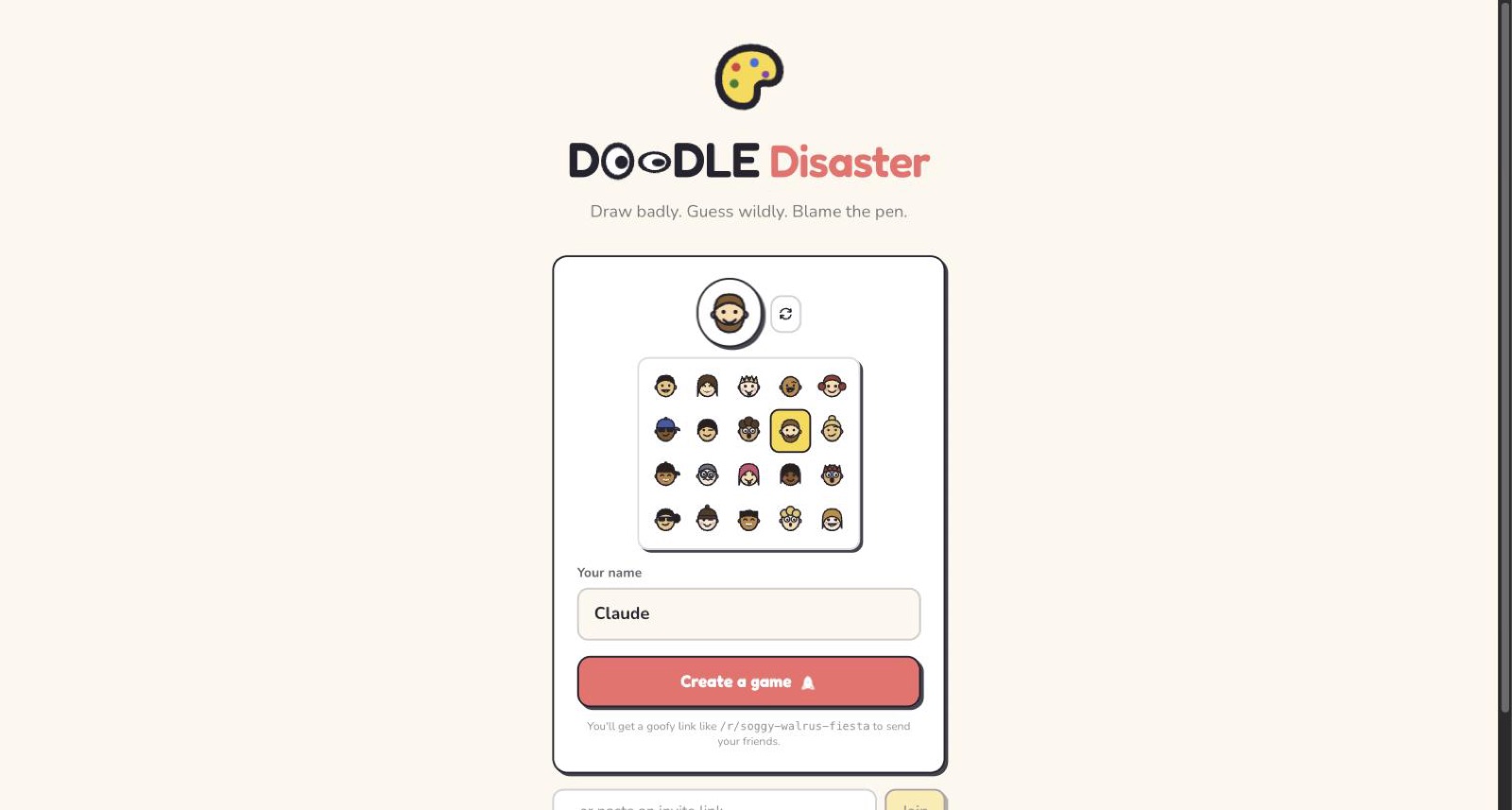
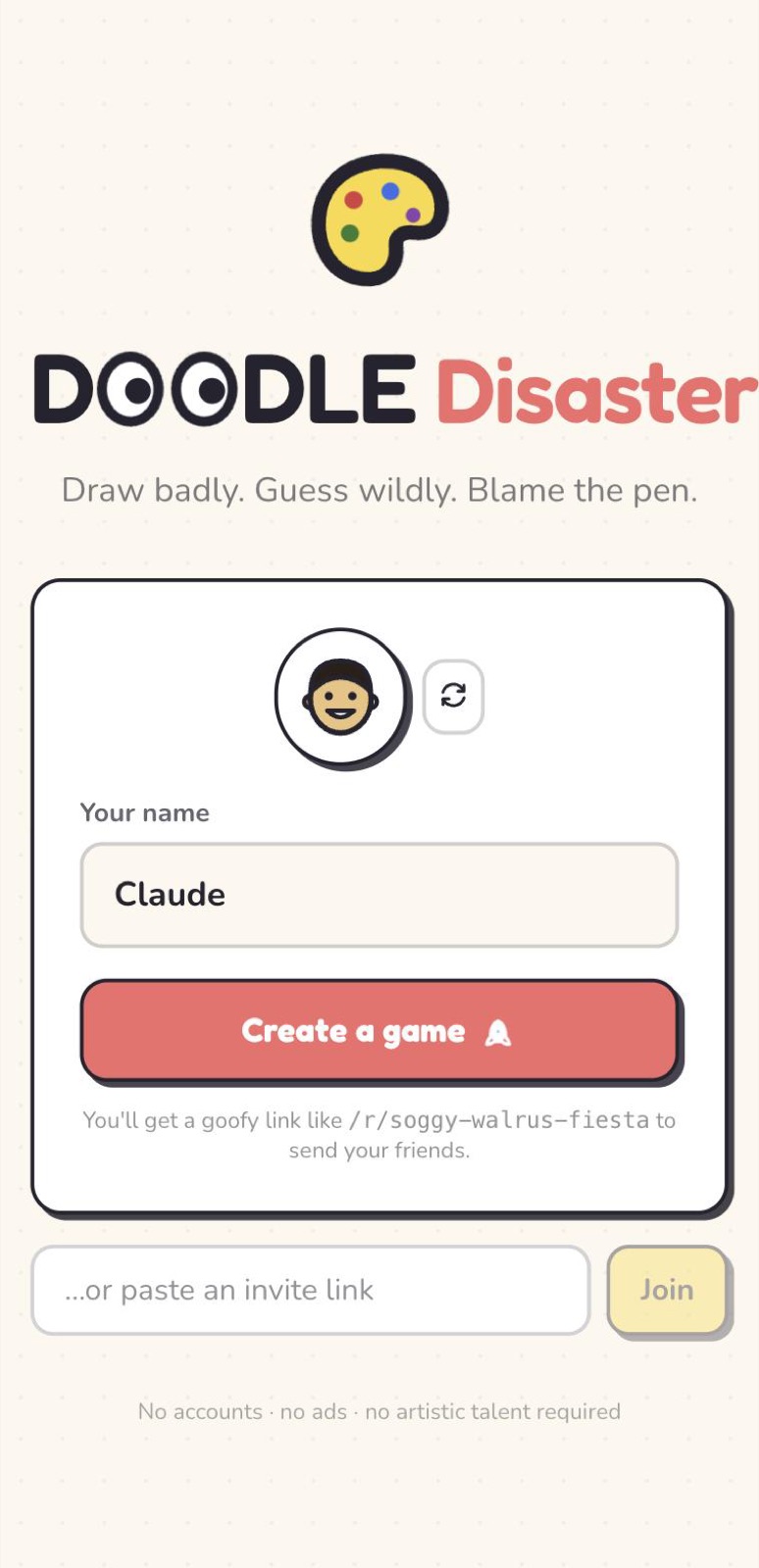
This is one page. Type a name, hit Create a game, and you get a room like /r/soggy-walrus-fiesta to paste in the chat. Anyone who clicks it is in. Short of players, the host drops in up to three bots that take real drawing and guessing turns.
Tour
One round, start to finish
doodle-disaster.vercel.app
Getting in
Pick a face, type a name
The whole sign-up is a display name and one of twenty hand-drawn faces. Create the game and the room gets a nonsense three-word address that anyone with the link can open.
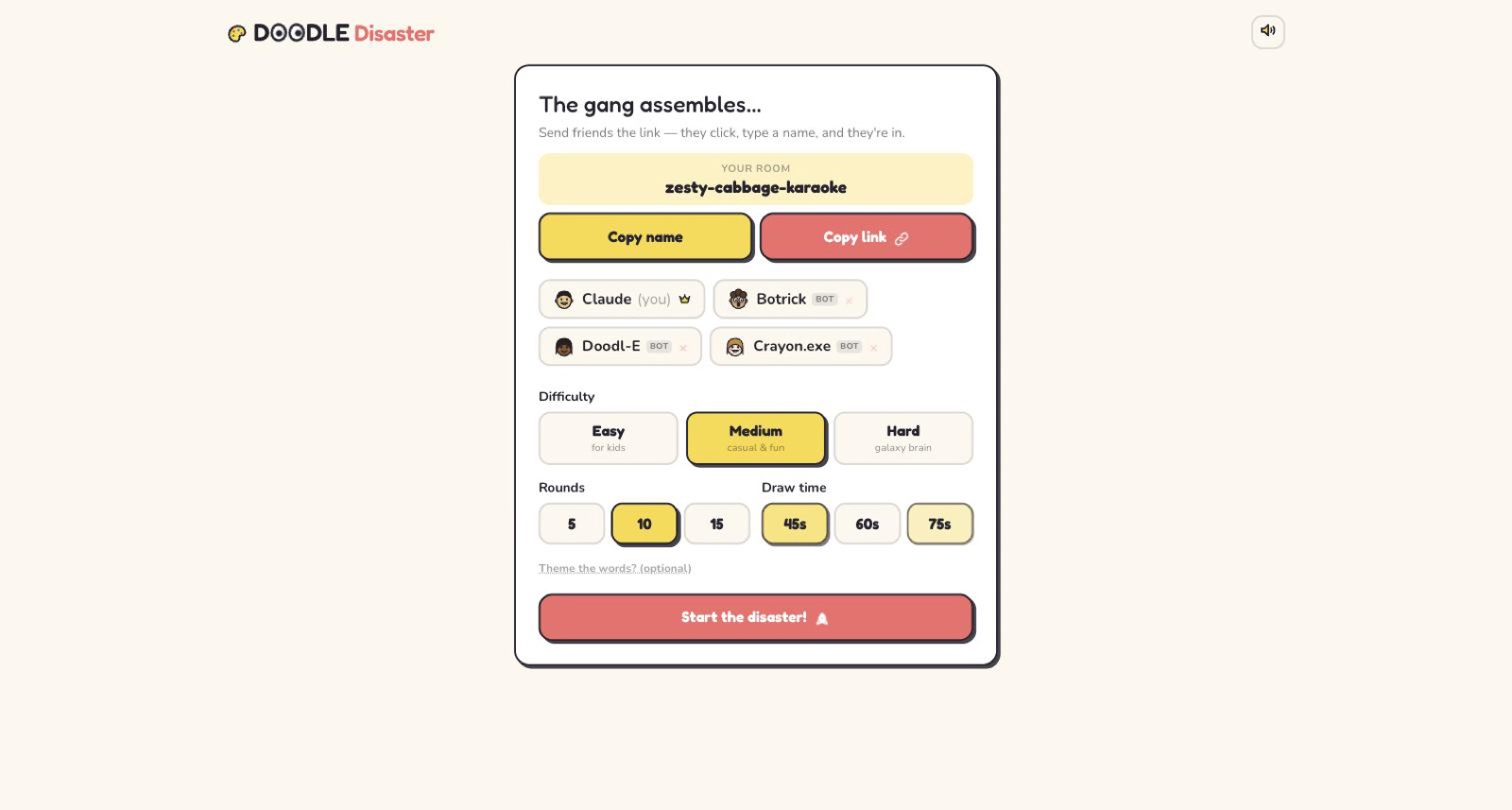
The host picks a difficulty, five to fifteen rounds, and a 45, 60 or 75 second timer. Short a few players? Add Botrick, Doodl-E and Crayon.exe, who take drawing turns like anyone else.
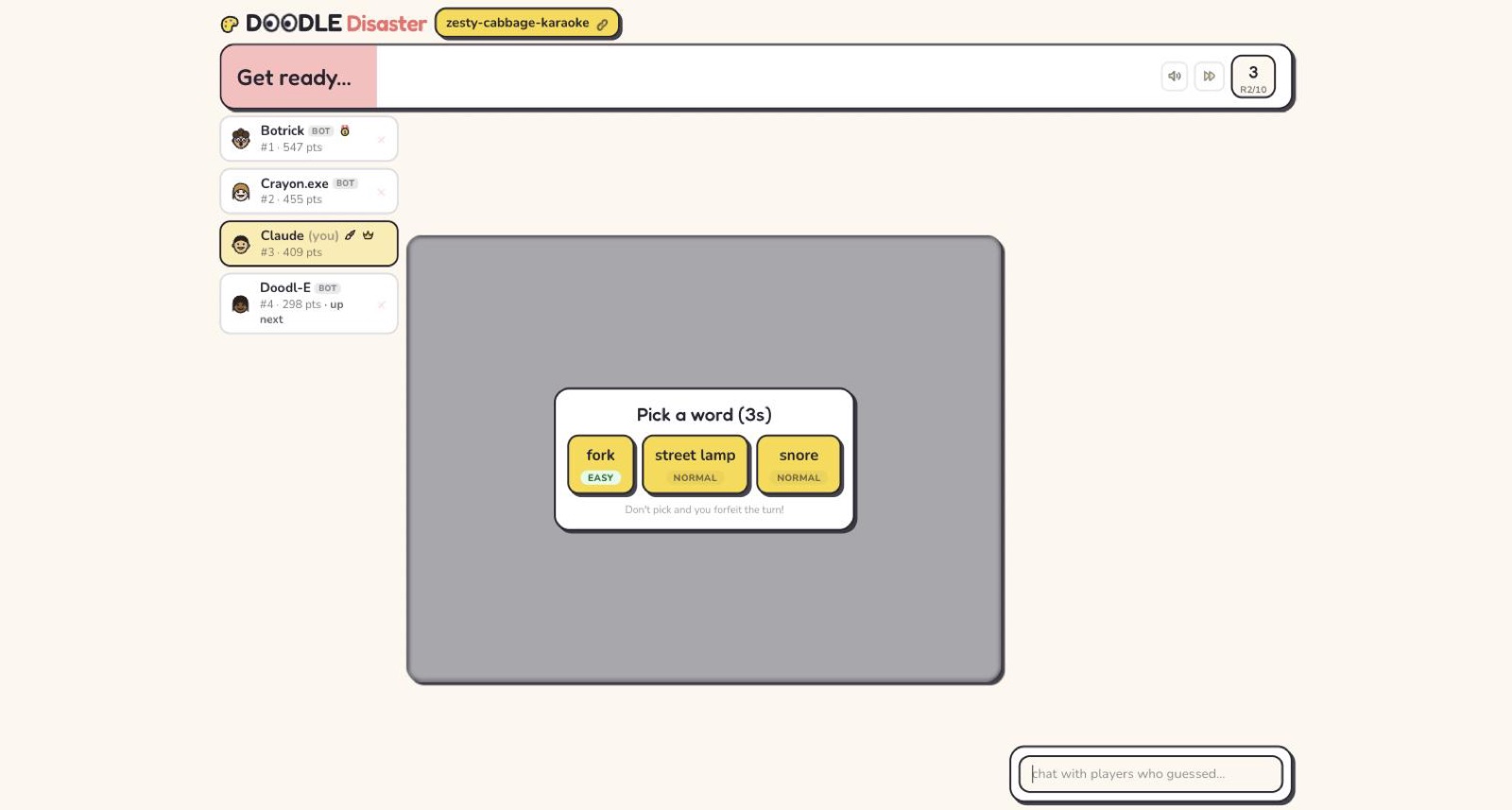
The drawer gets three choices tagged easy, normal or chaos, and fifteen seconds to commit. Dither and the turn is forfeited — auto-picking only produced rounds where nobody drew anything.
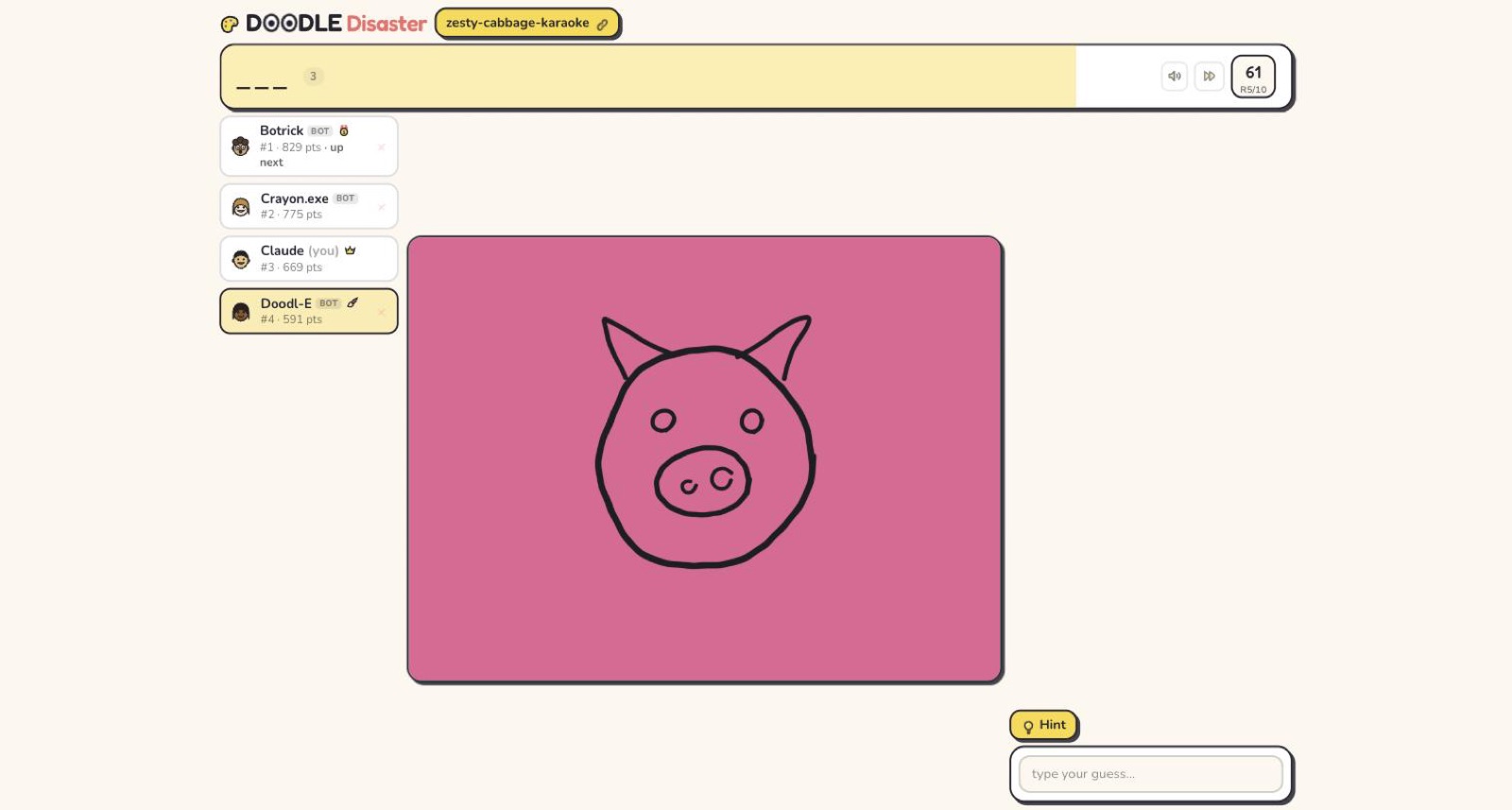
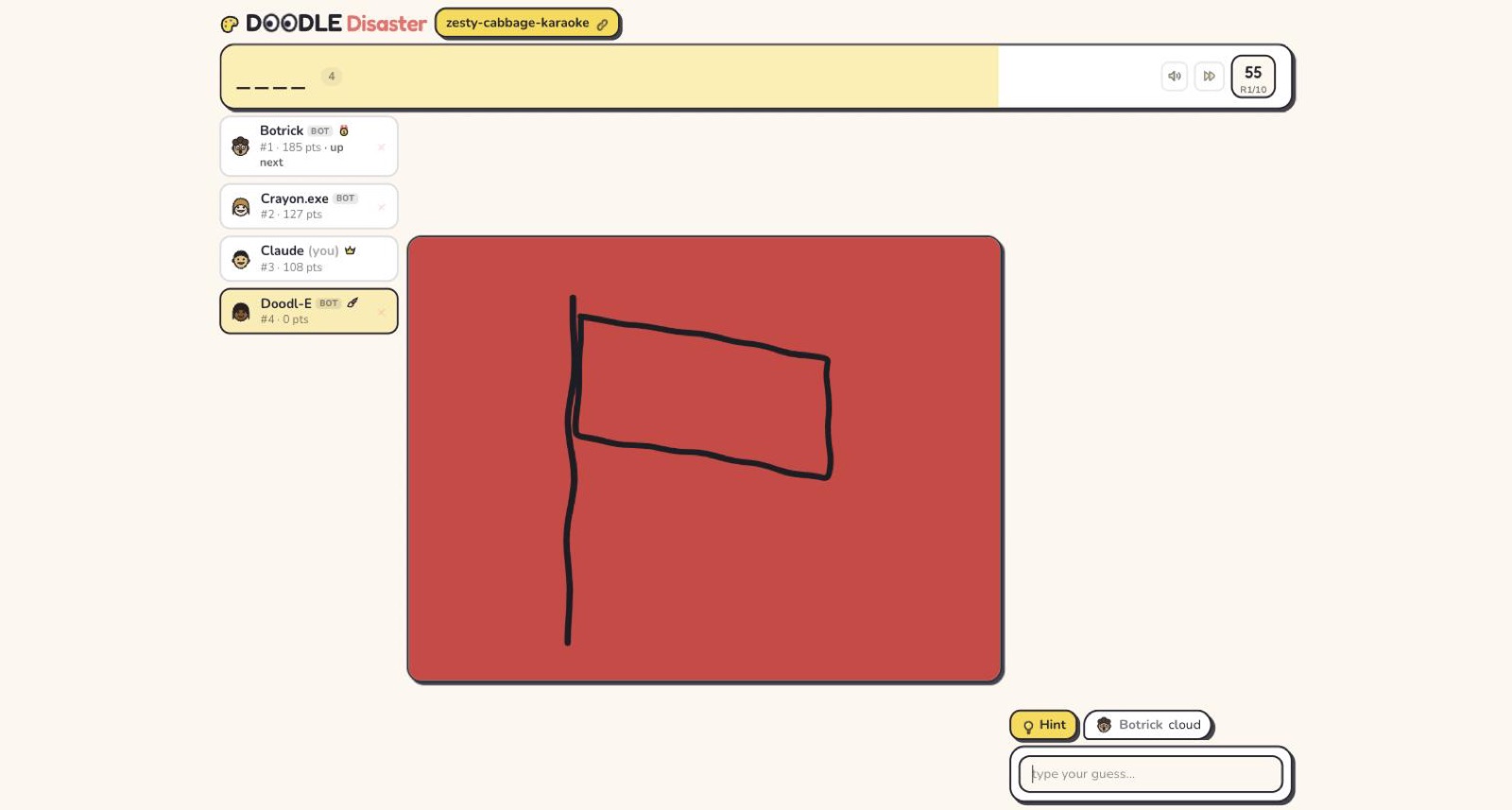
Pen, eraser, fill, undo, clear and fourteen colours, streaming stroke by stroke to the room. Guessers type; a near miss comes back as “sooo close”, and letters of the word unlock as the clock drains.
Points for guessing early, not typing fast
A hint token reveals one letter, only to you
Players who got it keep chatting in private
On a phone
Built for the couch, too
The layout reshuffles for touch, and the game ships its own on-screen keyboard so the system one never shoves the drawing off the screen mid-guess. Add it to the home screen and it runs full screen.
Installable: web manifest and service worker
Separate portrait and landscape layouts
No offline mode — the game is live
How it works
From an idle group chat to a running game
Four things happen, in this order, and none of them involve a password.
01
Make a room
Type a name, pick an avatar, hit create. You land in a lobby holding a link like /r/zesty-cabbage-karaoke.
02
Send the link
Everyone who opens it types a name and they’re in. Two players is enough, and the host can add bots for the rest.
03
Draw and guess
Each turn, one player picks a word and draws it while everyone else types guesses. Getting there first is worth the most.
04
Survey the damage
After the last round the scores come up with medals and confetti, next to a gallery of every drawing the room produced.
Features
What’s actually in it
Live canvas
Strokes stream to everyone as you draw, over a Supabase Realtime channel. Late joiners get the board resent.
Bots that draw
Three bots with 101 hand-authored doodles, run through a pass that adds tremor, overshoot and the odd undone stroke.
Bots that guess
The board is snapshotted and shown to Claude Haiku 4.5, which guesses against the same letter mask you see.
Themed word lists
Ask for “90s cartoons” and the room gets its own easy, normal and chaos words. Rude themes get refused.
Hints you spend
Letters unlock on a timer for the whole room; a personal hint token reveals an extra letter only you can see.
Near-miss detection
A guess within an edit or two of the word comes back as “sooo close” — shown to you, not to the room.
Touch keyboard
Phones get an in-app QWERTY, so the system keyboard never covers the drawing while you are guessing.
Host controls
Skip a stuck drawer, remove a player, add or drop bots, and set rounds, timer and difficulty from the lobby.
End-of-game gallery
Every drawing from the session is kept and shown with its word beside the final scoreboard.
Built with
The stack, and where the drawings go
Next.js 16
React 19
TypeScript
Tailwind CSS v4
Supabase Postgres
Supabase Realtime
Vercel AI SDK
Claude Haiku 4.5
Vercel
Each room is a single JSON row in Supabase Postgres, updated with optimistic concurrency and pushed to players over a Realtime channel. Your name and avatar never leave your own browser. Bot guesses and themed word lists call Claude Haiku 4.5, which I pay for.
FAQ
Reasonable questions
Is it free?
Yes, and there are no ads. The bot guesses and the themed word lists call a language model that I pay for, so please don’t leave a room open overnight.
Do I need an account?
No. A display name and an avatar are the whole identity, and both are picked on the same screen as the create button. Nothing is emailed or verified.
Where does my data go?
Room state — players, scores, the current word — sits in a Supabase Postgres row. Your name and avatar stay in your browser. A drawing only leaves the room when a bot is guessing it.
How many people do I need?
Two, and at least one of them has to be human. Bots make up the difference. Ten players is the cap, three of which can be bots.
Does it work on my phone?
Yes. Install it from the browser menu and it runs full screen with its own keyboard. There is no offline mode — the whole game is other people, live.